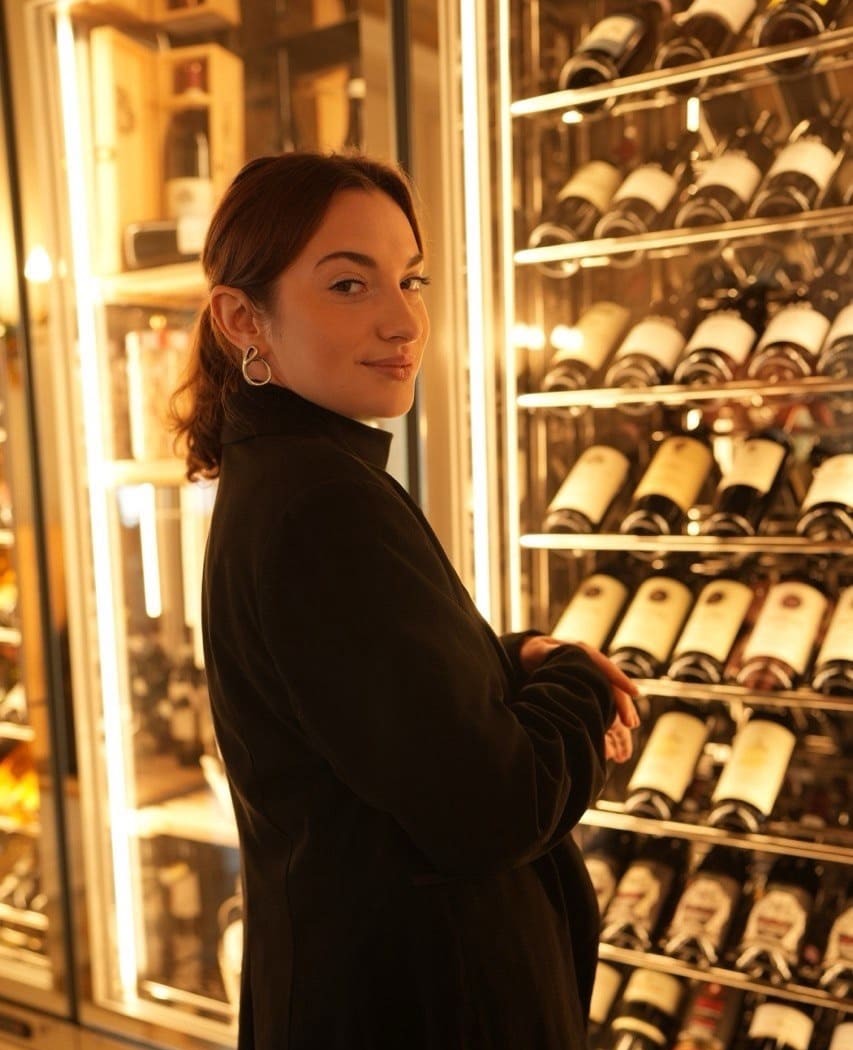
Interview with a Bartender About Character, Flavour and Perfect Mixology

We go behind the scenes of bar culture with a professional who reveals the secrets of creating Nemiroff-based cocktails and explains why true mixology is not only about recipes, but also about a philosophy of strength and resilience.
At first, I saw bartending as a temporary profession. However, I gradually became fascinated by the process of mixing ingredients, the way they work together, and the opportunity to create an emotional experience for guests. It showed me just how interesting and diverse this field can be. Creativity, freedom and new horizons made me realise that I would be staying behind the bar for a long time.
I highlight vodka in cocktails, showing that it can be a bold, vibrant and exciting base. I often surprise guests afterwards by telling them that the cocktail they have just enjoyed was made with vodka. Many people still have preconceptions about this spirit, but the result often speaks for itself.
Vodka does not simply have to “disappear” into a cocktail. It can hold the drink’s structure, enhance its flavour and create room for unexpected combinations: porcini mushrooms and cocoa, raspberry and garlic, guelder rose and elderflower, or aloe and orange.
Of course, such experiments should always be approached with care. It is important to have the guest’s consent to experiment and to be mindful of allergies and specific preferences.
Because of its purity, high-quality vodka is an extremely versatile base for mixology. It can work with a wide range of flavour profiles: sour, salty, sweet, bitter, spicy and herbal.
What makes Nemiroff distinctive is that each product has its own character. For example, I see LEX as a very pure and elegant base that should not be overloaded. It works particularly well when structure, texture and precision are required.
Flavoured expressions such as The Inked Collection Burning Pear and other products from The Inked Collection should not be viewed simply as “flavoured vodkas”, but as complex bases with their own distinctive flavour profiles. They already contain many different notes, so the bartender’s task is not to overpower them, but to highlight them properly, make the most of the product’s qualities and build a balanced cocktail around them.
In a sour, this could mean adding a sour component, a sweet component and egg white. In a highball, it could be soda water, quality ice and an aromatic garnish. This range often feels like a cocktail in a bottle — it simply needs to be served well or subtly enhanced.
Following the correct techniques, using quality ice, choosing elegant and functional glassware that has been chilled in advance, maintaining balance, and working with fresh ingredients.
I always recommend starting with the classics and gradually adding variety to a particular element — whether it is the garnish, juice or liqueur — to introduce creativity. I often say that perfection is achieved not when there is nothing left to add, but when there is nothing left to take away.
That is why I favour simplicity, minimalism and subtle adjustments to classic recipes, as well as careful exploration and a gradual approach to developing original cocktails.
My ideal way to serve Nemiroff De Luxe is in an Old Fashioned glass with a large block of quality ice, 50 ml of vodka, lemon zest and a green olive.
I call it a Fake Vodka Martini because Nemiroff De Luxe is so smooth that it can be served simply chilled and enhanced with citrus and an olive, without the addition of vermouth.
For more distinctive pairings, I would recommend The Inked Collection Burning Pear with mature cheeses, The Inked Collection Bold Orange with vanilla ice cream or dark chocolate, and The Inked Collection Wild Cranberry with tuna.
I do not work in one particular bar. I travel extensively and create cocktail menus in different parts of Ukraine and around the world. For me, Ukrainian authenticity is not about literally reproducing traditions, but about reinterpreting them in a contemporary context.
Today, Ukrainian identity naturally goes hand in hand with innovation and multicultural experience. For example, Langeron, a cocktail dedicated to Odesa from my latest cocktail menu, is based on The Inked Collection Burning Pear, a Nemiroff De Luxe infusion with galangal and tonka beans, an Italian melon aperitif and Italian bitters.
In other words, we do not limit ourselves exclusively to Ukrainian ingredients. Instead, we work with Ukrainian associations, places, moods and flavour memories. To me, this is what modern authenticity means: not something preserved in a museum, but a living dialogue between local roots, personal experience and global bar culture.
For me, the most difficult orders are not technically complicated cocktails, but situations in which guests do not fully understand what they want. For example: “Make me something that is not sweet, but not sour either; something interesting, but without any unusual ingredients.”
In moments like these, the key is not to panic, but to ask a few well-chosen questions, narrow down the options and take responsibility for the result. It is also important to remember that you can always adjust the drink or prepare a new one.
Professional composure comes from experience, preparation and the ability to listen to the guest. I also have a useful trick: I remind myself that all guests simply want attention, especially when they are being demanding, making comments or correcting something. That thought always makes me smile.
I see Ukrainian bar culture becoming more confident, visible and independent. We are no longer simply following global trends — we are developing our own voice through local ingredients, Ukrainian products, strong hospitality and the very real experience of working under difficult circumstances.
In my opinion, the next five years will see Ukraine enter the international scene not only through individual talented bartenders, but through complete concepts, brands, bars and events. We have character, traditions, craftsmanship and charisma — and we have something meaningful to say to the world.
Something familiar yet unexpected: a vodka spritz with alcohol-free sparkling wine, such as a Wild Cranberry Spritz, or a mojito made with pear-flavoured vodka, such as a Pear Mojito.
Vodka can be used to reinvent any existing cocktail or bring an entirely new creation to life. It is a reliable base for experimentation.
My plans are to continue globalising and promoting Ukrainian products, talking about responsible consumption and enriching guests’ gastronomic experiences. I also want to support the younger generation of bartenders, share my experience with them, inspire others and continue to find inspiration myself.
I would like to explore Ukrainian traditions even more deeply and reinterpret them through contemporary bar culture, including guest shifts, private dinners, interviews, collaborations and international projects.
This is a wonderful time in which a bar is no longer simply a place to have a drink, and bartending is no longer simply a profession. It is a multifaceted field that brings together flavour, emotion, community, development and cultural dialogue.
Read also
View all