The alcohol market in Ukraine is one of the most strictly regulated sectors. The state controls production, circulation, advertising, pricing and business responsibility. These measures are taken to reduce market shadowing, protect consumers, improve safety and fill the budget.
2025 saw the biggest legislative transformation in recent years. On January 1, the new Law of Ukraine No. 3817-IX came into force, replacing the basic 1995 law and significantly changing the rules of the game in the market. Understanding how the alcohol market in Ukraine and legislation interact is critical for all business participants.
This article explains how laws affect the alcohol market and what restrictions exist for Nemiroff and other producers. We will look at the key legislative acts that shape state regulation of alcohol, as well as detail the restrictions on the time, place, and manner of sale.
Regulatory framework: key laws and subordinate legislation
The regulation of the alcohol market in Ukraine is based on several fundamental laws. The main regulatory act is the Law of Ukraine “On State Regulation of the Production and Circulation of Ethyl, Cognac and Fruit Alcohol, Alcoholic Beverages, Tobacco Products, Liquids Used in Electronic Cigarettes, and Fuel.” It defines the basic rules for licensing, certification, quality control, and sets limits on the sale of alcohol (Ukraine).
In addition, the following play an important role:
– The Tax Code of Ukraine, which regulates the rates of excise tax, which is the main fiscal instrument.
– The Law of Ukraine “On Advertising”, which imposes strict limits on the promotion of alcoholic products.
– Numerous resolutions of the Cabinet of Ministers and orders of the Ministry of Finance, which detail licensing and control procedures, including the procedure for issuing excise tax stamps.
These documents form a complex but structured system that creates a legal framework for all market operations.
Rules and limits on sales
The state applies a number of strict rules that directly affect trade. They are a key feature of how alcohol laws in Ukraine protect public interests.
Age requirements and customer identification
According to Law No. 481, selling alcohol to persons under the age of 18 is strictly prohibited. This applies to shops, cafes, bars, and delivery services. Selling alcohol to minors is punishable by a fine of 6,800 to 13,600 UAH for the employee who sold the product. In addition, the business entity is subject to a fine of the same amount, and its licence may be cancelled.
The seller is obliged to verify the age of the buyer if they have doubts about whether the latter has reached the age of 18. To do this, it is necessary to request a Ukrainian passport or other document confirming age. An important nuance: a person is considered to have reached a certain age not on the day of his birthday, but starting at 00:00 the following day. This comes from Article 34 of the Civil Code of Ukraine, which stipulates that a person who has reached the age of 18 (legal age) has full civil capacity.
Place and time of sale, distance selling
At the national level, there are no restrictions on the time of the sale of alcohol, but local authorities may establish their own rules. Nighttime sales are usually prohibited from 10 p.m. or 11 p.m. to 7 a.m. Such decisions are in effect in most large cities.
Remote alcohol sales are not directly prohibited by law, but are regulated by strict requirements. Sales are only possible through a cash register/payment terminal, with the buyer’s identification during the transfer of goods. Alcoholic products Nemiroff and other brands are delivered by the seller or an authorised courier, who must verify the customer’s age. Without this, the transaction is considered illegal.
Advertising, promotion and marketing restrictions
Based on Ukrainian legislation, alcohol advertising is also subject to restrictions. The following is prohibited:
– advertising on TV and radio (except between 11 p.m. and 6 a.m.);
– placement on transport, in printed publications for children and young people;
– sales promotion using gifts, discounts or promotions aimed at minors.
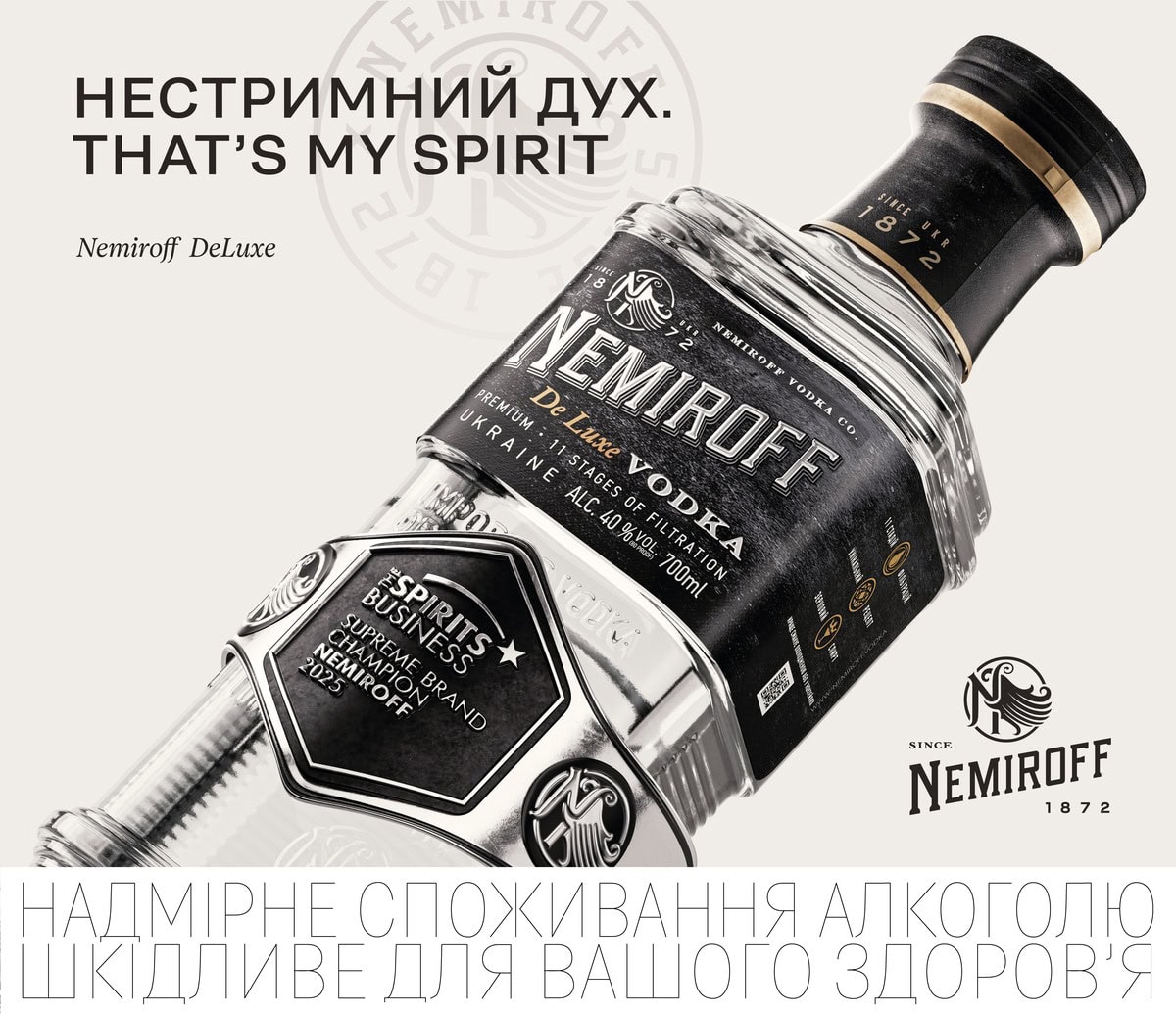
All content must include warnings about the dangers of excessive consumption. It is a clear government policy on alcohol, aimed at promoting responsible drinking.
Taxes and excise duties: how they shape the final price
Excise tax is one of the main factors in pricing. Rates are set by the Tax Code and reviewed regularly. In 2025, the excise tax rate on vodka is 141.06 UAH per litre of 100% alcohol, on wine — 11.65 UAH per litre, and on beer — 2.78 UAH per litre.
VAT on alcoholic beverages is a standard 20%. Together with excise tax, this means that the tax component in the price of alcohol can reach 40-60% for spirits and 25-35% for beer and wine.
These taxes are included in the cost of production, forming the final price for buyers. This policy is aimed not only at filling the budget, but also at preventing excessive consumption of alcoholic beverages.
Licensing and control
Since April 19, 2025, the licensing system has undergone radical changes thanks to Law No. 3817-IX. Key innovations include:
– Perpetual licences. Instead of annual licences, perpetual licences are now issued. This simplifies administration for businesses and reduces bureaucratic burden.
– Electronic form. Licences are issued exclusively in electronic form through the Unified State Register of Licence Holders for the Circulation of Excise Goods.
– From January 1, 2025, the licence fee is linked to the minimum wage set by law as of 1 January of the tax period.
The cost of licences varies significantly depending on the type of activity and place of trade. To obtain a licence, a retail outlet must have an area of at least 20 square metres. The use of a cash register or cash register software to record each sale is mandatory. Salespeople must have the appropriate qualifications and understand their responsibility for violating trade rules.
Impact on business and the competitive environment
Regulation creates both barriers and advantages. On the one hand, strict requirements for labelling, cash registers, reporting and licensing increase operators’ costs. It is especially noticeable for small businesses operating in the format of small shops.
On the other hand, clear rules for the sale of alcohol in Ukraine reduce the share of the shadow market. It is particularly noticeable in the wine and spirits segments. In particular, Nemiroff production and other well-known brands have been given a level playing field for doing business, as it is becoming increasingly difficult for illegal producers and sellers to operate. That is why the share of counterfeit products has been declining in recent years.
Thus, the impact of laws on the alcohol business is twofold: it makes it more difficult to enter the market, but at the same time makes it more civilised and predictable.
Prospects and harmonisation with the EU
Ukraine’s European integration involves harmonisation of national legislation with EU legal norms. The Association Agreement between Ukraine and the European Union contains specific commitments to align legislation in the field of taxation, including regulation of the alcohol market.
It means:
– further alignment of the excise duty system with Directive 92/83/EEC;
– improvement of advertising rules;
– introduction of electronic systems for monitoring the circulation of alcohol and excise stamps;
modernisation of quality standards.
If Ukraine joins the EU, the alcohol business will gain access to the common European market without trade barriers. This process will improve the investment climate but will increase the requirements for technological equipment in production. In the future, we can expect an intensification of the fight against illegal trafficking, higher environmental requirements for packaging, and obligations for manufacturers to recycle it.
Summary
Ukraine has a comprehensive system for regulating the alcohol market, covering production, import, trade, advertising and quality control. Through excise duties, licences, age restrictions and local regulations, the state establishes clear conditions for the circulation of products and encourages responsible consumption. This is how the state’s alcohol policy works, affecting the entire chain from producers to retail outlets.
Despite their complexity, these requirements create a predictable environment and increase the competitiveness of legal operators. In the long term, harmonisation with the EU will make the system even more transparent and business more secure. In this context, it becomes clear that laws have a significant impact on the alcoholic beverage market and that stable regulation is a key factor in the development of the industry in Ukraine.