


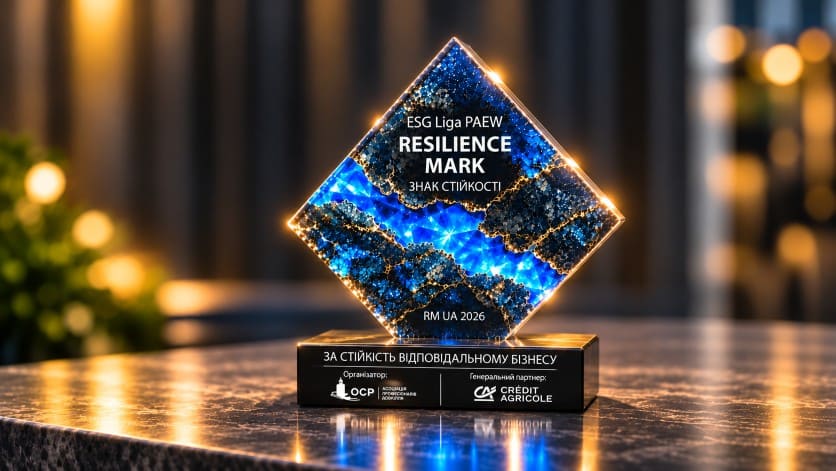
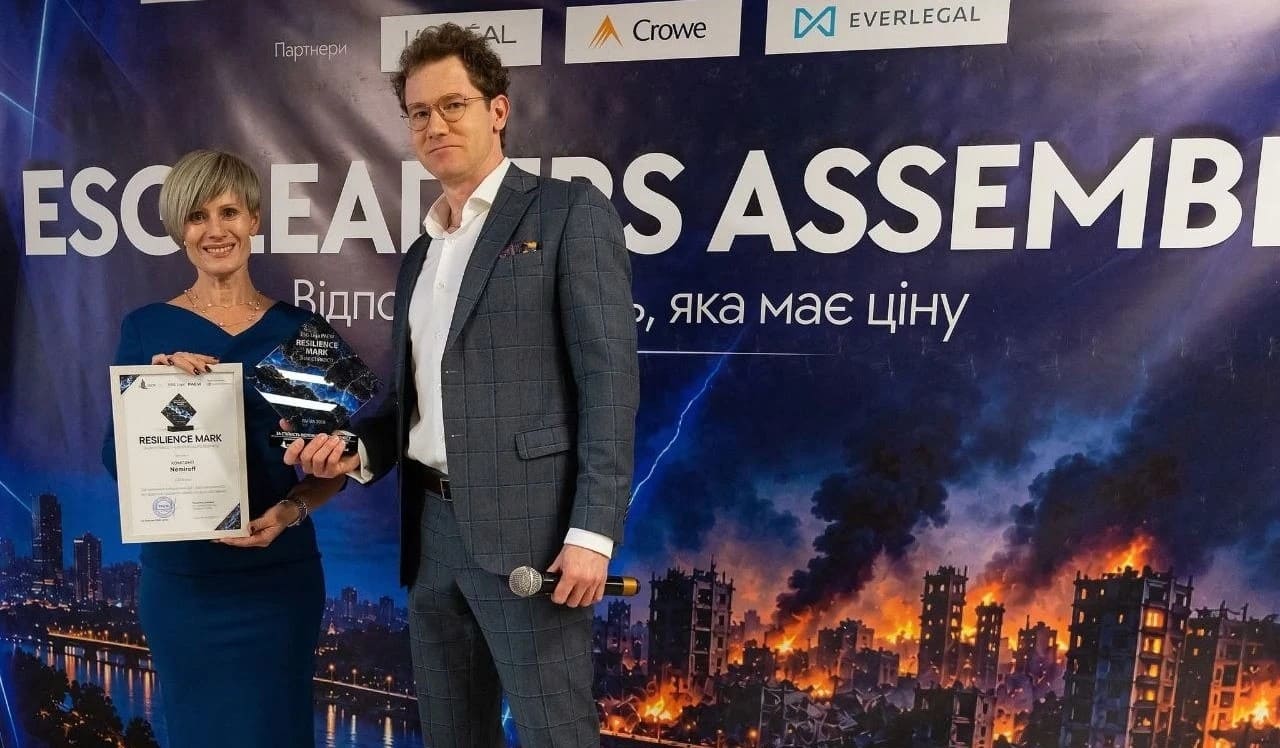
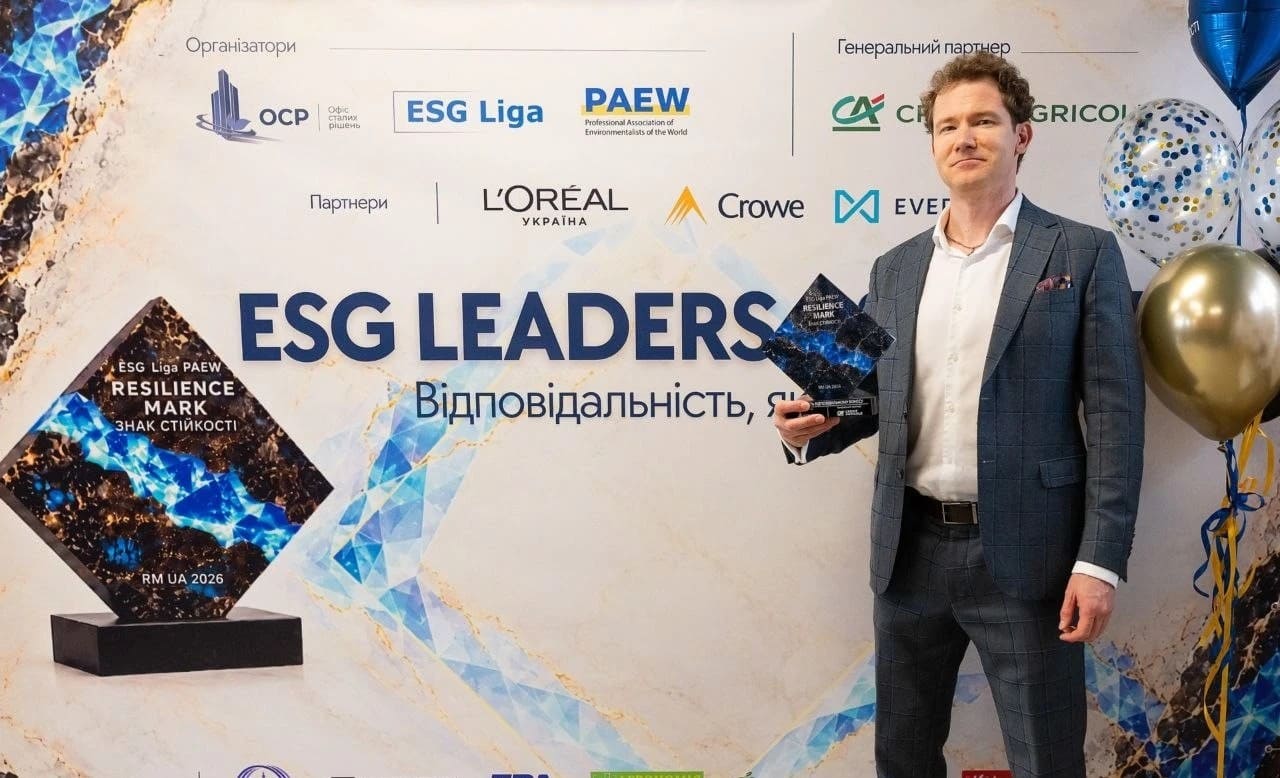
On October 22, Nemiroff received RESILIENCE MARK 2026 at the ESG Leaders Assembly in recognition of its efforts to strengthen energy independence, improve resource efficiency and maintain international competitiveness during the war. Maxim Miloradov, Head of the Legal Department at Nemiroff, accepted the award on behalf of the company.
What Is ESG and How Does It Relate to Business Resilience?
ESG (Environmental, Social and Governance) is a framework for responsible business practices built around three interconnected areas:
– Environmental — the efficient use of energy and natural resources, waste reduction and minimising environmental impact.
– Social — ensuring safe and fair working conditions, employee support, and engagement with communities and society.
– Governance — transparent decision-making, legal compliance, risk management and corporate accountability.
ESG is becoming an increasingly important consideration in how international businesses work with partners, investors and financial institutions. Alongside financial performance, these stakeholders look at how companies manage resources, address risks and contribute to society.
For Ukrainian businesses, these principles have become particularly relevant during the full-scale war. Maintaining production continuity, supporting employees, meeting commitments and continuing to develop despite difficult circumstances are all important indicators of business resilience.
RESILIENCE MARK: Recognising Tangible Results
RESILIENCE MARK recognises companies demonstrating responsible business practices that deliver measurable results. Unlike a traditional ranking, it does not select a single winner. Instead, the assessment focuses on the quality of implemented solutions, their practical value, proven results and long-term impact.
This recognition is based on specific projects undertaken by Nemiroff ranging from the development of its own energy infrastructure to more efficient resource use. Some are already delivering measurable results, while others are shaping the next stages of production modernisation.
Energy Independence: On-Site Generation and Future Projects
Amid regular attacks on Ukraine’s power grid, the ability to meet part of the plant’s electricity needs independently helps Nemiroff reduce its reliance on external energy supplies and maintain the stability of its production processes.
In 2025, Nemiroff’s gas-fired combined heat and power (CHP) unit generated 1,139,200 kWh of electricity, covering 47% of the plant’s electricity needs. CHP technology produces electricity and thermal energy simultaneously, making more efficient use of fuel.
The plant has also modernised its cooling and heating systems, introduced the reuse of heat from the CHP unit and implemented additional energy-efficiency measures. Together, these improvements contribute to a more efficient energy use and greater operational reliability.
The next stage of development includes a planned biogas facility. The project is designed to process distillery stillage, a by-product of alcohol production, into biogas for the plant’s energy needs and digestate that can be used in agriculture.
This is an example of the circular economy in practice, where by-products from one process become valuable resources for another. As of the end of 2025, the project was in the preparatory stage, with commissioning planned for 2027.
Resource Efficiency: Changes that Deliver Measurable Results
Responsible resource management extends beyond energy. It also includes the materials used in production and packaging, as well as waste management.
In 2025, Nemiroff began introducing lighter glass bottles, reducing the weight of a 0.5-litre bottle by approximately 35 grams. According to company estimates, this initiative is expected to save around 7.5 tonnes of glass and avoid approximately 4.5 tonnes of CO₂ emissions annually.
Waste management is another important area. In 2025, 99% of the waste generated at the plant was transferred to specialised contractors for recycling or treatment.
Business Resilience Also Means Supporting People and the Country
Technological improvements help maintain production stability, but business resilience goes beyond equipment and energy resources. It also means keeping operations running, supporting people and meeting commitments even under the most challenging circumstances.
Following the forced suspension of production at the start of the full-scale invasion, Nemiroff resumed operations, adapted its international logistics and continued serving overseas markets. Today, the brand is represented in more than 50 countries worldwide.
The company has also retained the jobs of employees who have joined the Armed Forces of Ukraine or have been forced to relocate abroad. Nemiroff continues to support Ukrainians, with total assistance provided during the war exceeding UAH 61 million.
The company’s contribution to the Ukrainian economy also remains significant. In 2025, Nemiroff paid more than UAH 2.1 billion in taxes, supporting the state budget at a time when these funds are particularly important.
Energy independence, more efficient resource use, employee support and contributions to Ukraine’s economy are all outcomes of the work carried out by different Nemiroff teams. Together, these efforts help the company maintain stability and continue developing despite the challenges of war. RESILIENCE MARK 2026 recognises the collaborative efforts behind these achievements.


