


The culture of conscious alcohol consumption continues to evolve, and more and more people are interested not only in the taste but also in the composition of drinks. How to figure out alcohol content in a glass is a question that comes up long before the first sip, whether you are ordering at a bar or mixing at home. Understanding the composition of a drink is part of making a responsible choice.
In this article, we will explain what ABV means, how to calculate alcohol by volume in a mixed drink, and consider the main factors that affect the strength of alcoholic beverages on the bar menu and at home.
What Does ABV Mean in Cocktails?
The abbreviation ABV (Alcohol by Volume) refers to the content of pure ethanol in a beverage, expressed as a percentage of the total volume. For example, if a beverage contains 12% ABV, it means that out of 100 ml of the beverage, 12 ml is alcohol.
Different alcoholic beverages are characterized by different standard ABV rates:
– beer: 2-8%;
– wine: 10-15%;
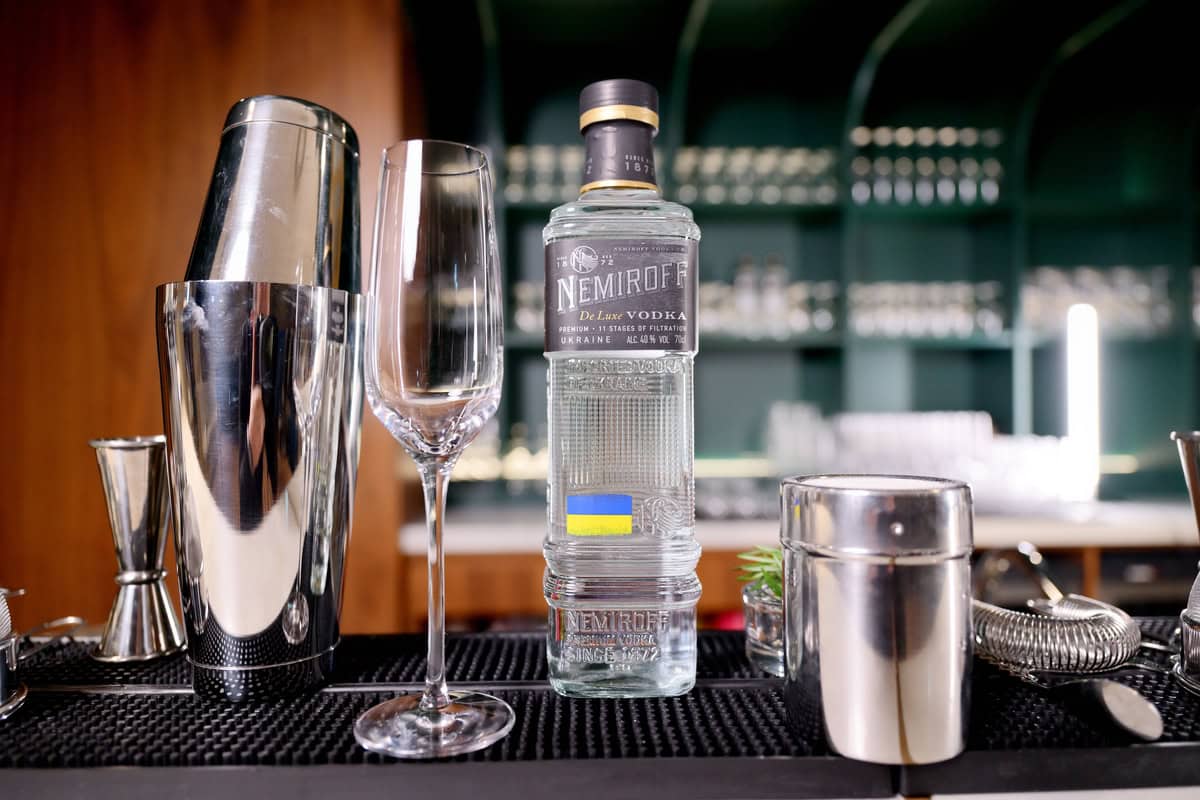
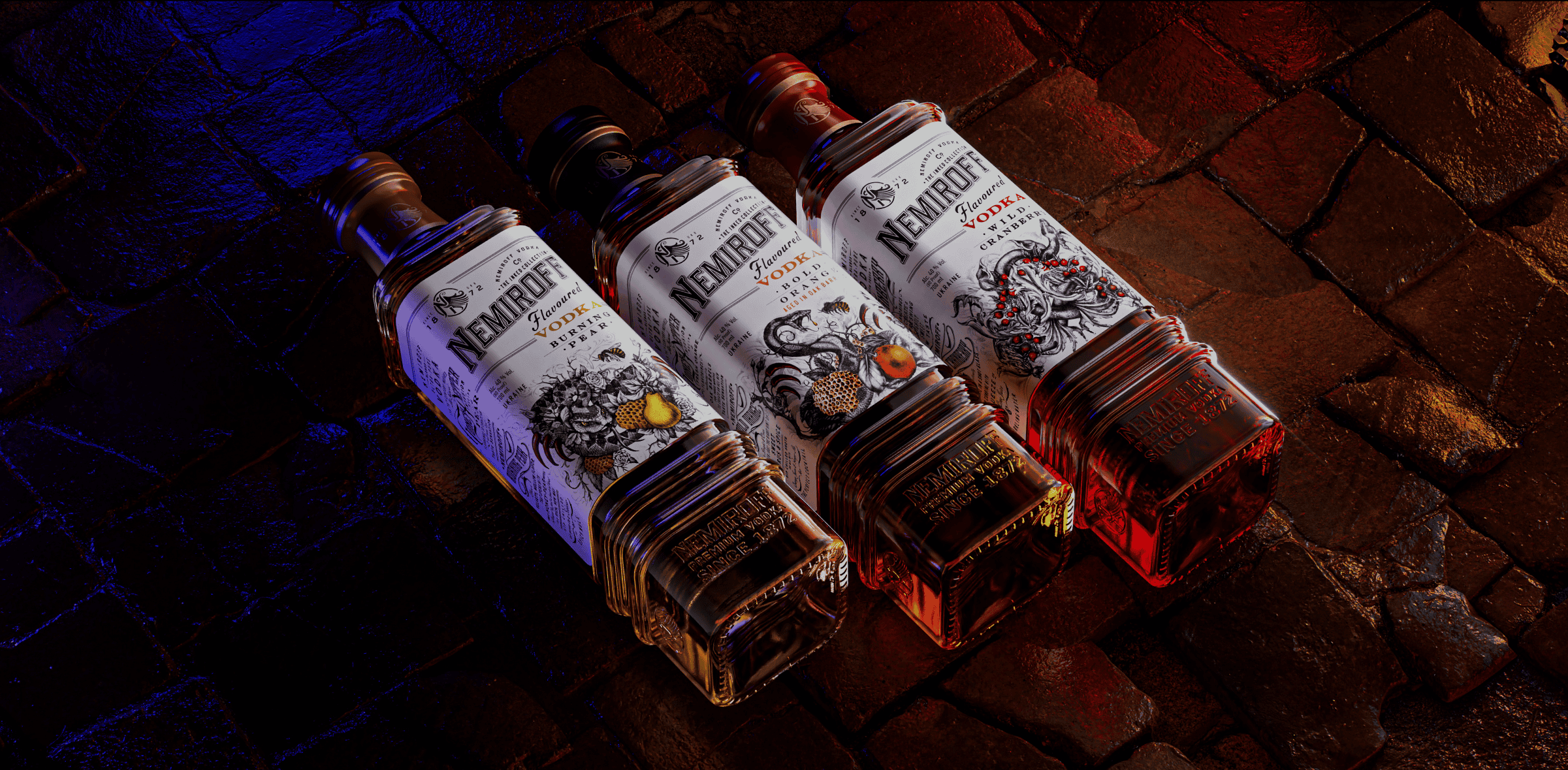
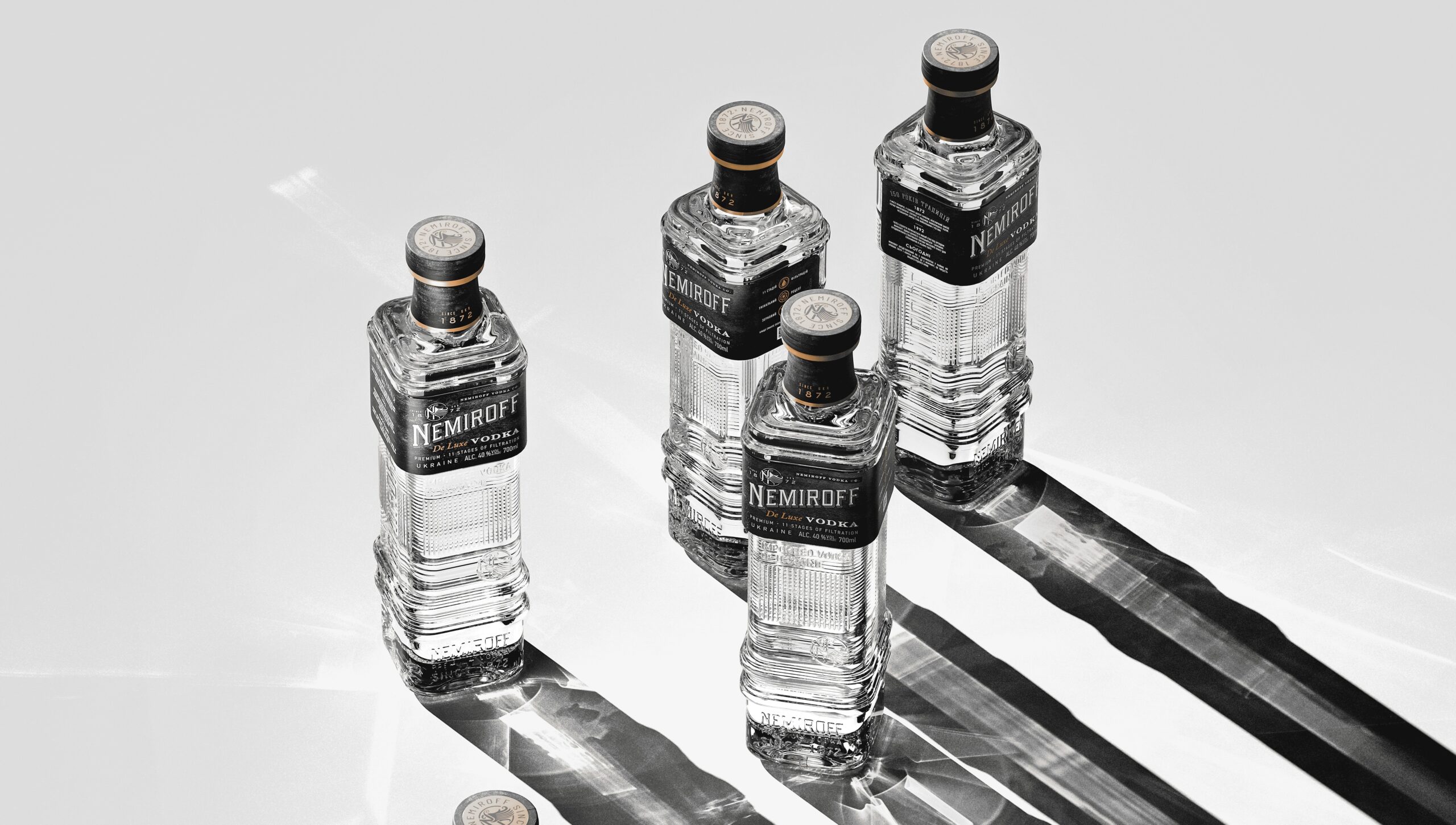
– Nemiroff vodka: 40%;
– whiskey, gin: 40-50%;
– liqueurs: 15-30%.
Understanding how to measure alcohol percentage allows you to control the strength of drinks more accurately and take a responsible attitude to their consumption.
Standard alcohol content in alcoholic beverages varies widely, which is why the same volume in two glasses can mean very different things.
Classification of Alcohol Percentage in Cocktails
The alcohol content(percentage) in cocktails depends on the ingredients and proportions. Even a simple mixture of two ingredients can have different alcohol strengths. Here is the classification of mixed drinks by ABV:
– Low alcohol percentage (up to 10%) – Aperol Spritz, Mimosa.
– Medium (10-20%) – Negroni, Cosmopolitan.
– High (over 20%) – Dry Martini, Manhattan.
To find out how many units of alcohol in a cocktail you are actually drinking, you need the formula.
How to Calculate ABV of a Mixed Drink (With Alcohol Content Formula)
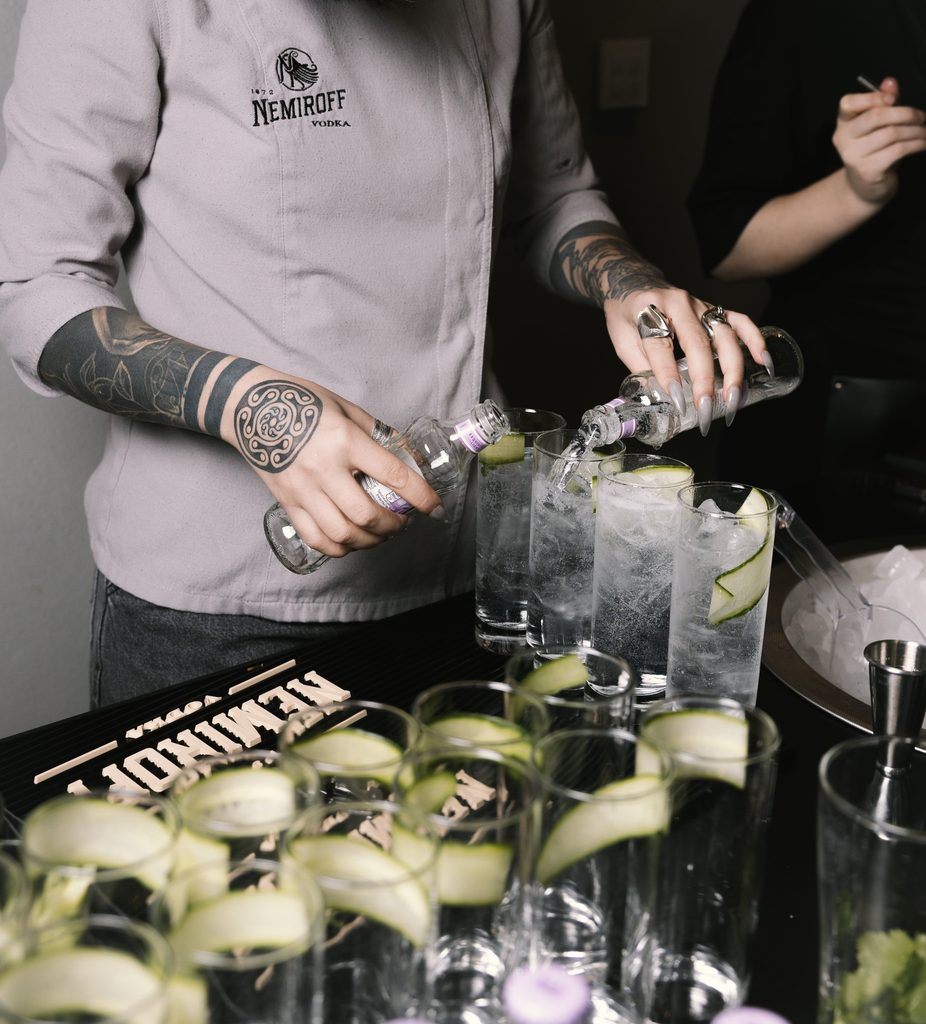
You don’t need to be a bartender or chemist to work this out. A few simple calculations are enough to accurately determine the strength of any mix. The algorithm suits both classic recipes and signature vodka cocktails.
You don’t need to be a bartender or chemist to work this out. Everything rests on one line:
ABV = (pure alcohol ÷ total volume) × 100
Pure alcohol is what you get when you multiply a spirit by its own strength, written as a decimal: 40% becomes 0.4. Total volume is everything in the glass, mixers and melted ice included.
Let’s take 50 ml of Premium Infused Vodka Selection at 40% ABV, 150 ml of tonic and about 15 ml of melted ice, which makes 215 ml in total. Then:
- multiply the volume of the spirit by its strength: 50 × 0.4 = 20 ml of ethanol;
- divide the ethanol by the total volume: 20 / 215 ≈ 0.093;
- multiply by 100 to get ABV: 0.093 × 100 = 9.3%.
So, we have a cocktail with an ABV of about 9.3%. This method allows you to adapt recipes to personal preferences and control the level of alcohol in each glass.
If you prefer automation, online ABV calculators do the same arithmetic in one click.
Factors That Influence Alcohol Percentage in Cocktails
To calculate ABV cocktail accurately, you should consider additional factors:
– Amount of ice – affects the total volume.
– Mixing time – long shaking increases the dilution.
– Sugar or juice content – dilutes the main ingredient.
– Type of alcohol – different drinks have different strengths.
Knowing these aspects makes the calculation more accurate and lets you build each drink around the strength you actually want. Explore the Nemiroff Vodka Collection on the official website of the producer and find the perfect base for any recipe.
Once you can estimate the strength of a drink in advance, it is easier to adapt any recipe to your own preferences and to keep the balance between taste and richness.
You may also like

FAQ
ABV (Alcohol by Volume) shows the percentage of pure alcohol in a drink relative to its total volume. Understanding ABV helps consumers compare the alcohol content in alcoholic beverages, drink responsibly, and make informed choices. For example, beer typically ranges from 4–6% ABV, wine from 11–14%, and spirits around 40%. Knowing ABV is especially important when mixing drinks, as the final strength can be higher or lower than expected depending on proportions.
A shaken drink picks up roughly 20-25% of its volume in melted water, a stirred one about 10-15%. In the example above, 15 ml of melt water pulled the ABV from around 10% down to 9.3%.
ABV is a percentage, not an amount. A 40 ml shot at 20% and a 300 ml highball at 20% look identical on paper, but the second one carries seven times more pure alcohol.
Using how to calculate the ABV of a mixed drink calculator can be a fast and convenient option. These calculators are generally accurate if you enter correct ingredient volumes and ABV values. However, they may not consider the factors like ice dilution, evaporation, or rounding differences between measurement systems. For the most precise results, it’s best to understand the formula behind the calculation and use calculators as a supportive tool.
People often ask how many units of alcohol in a cocktail, but the answer varies widely. A cocktail made with one standard shot of 40% spirit usually contains about 1–1.5 units, while stronger or larger cocktails can contain 2–3 units or more. The number of units depends on the type of alcohol, its strength, and the serving size, which is why calculating ABV is so helpful for understanding what you’re really drinking.